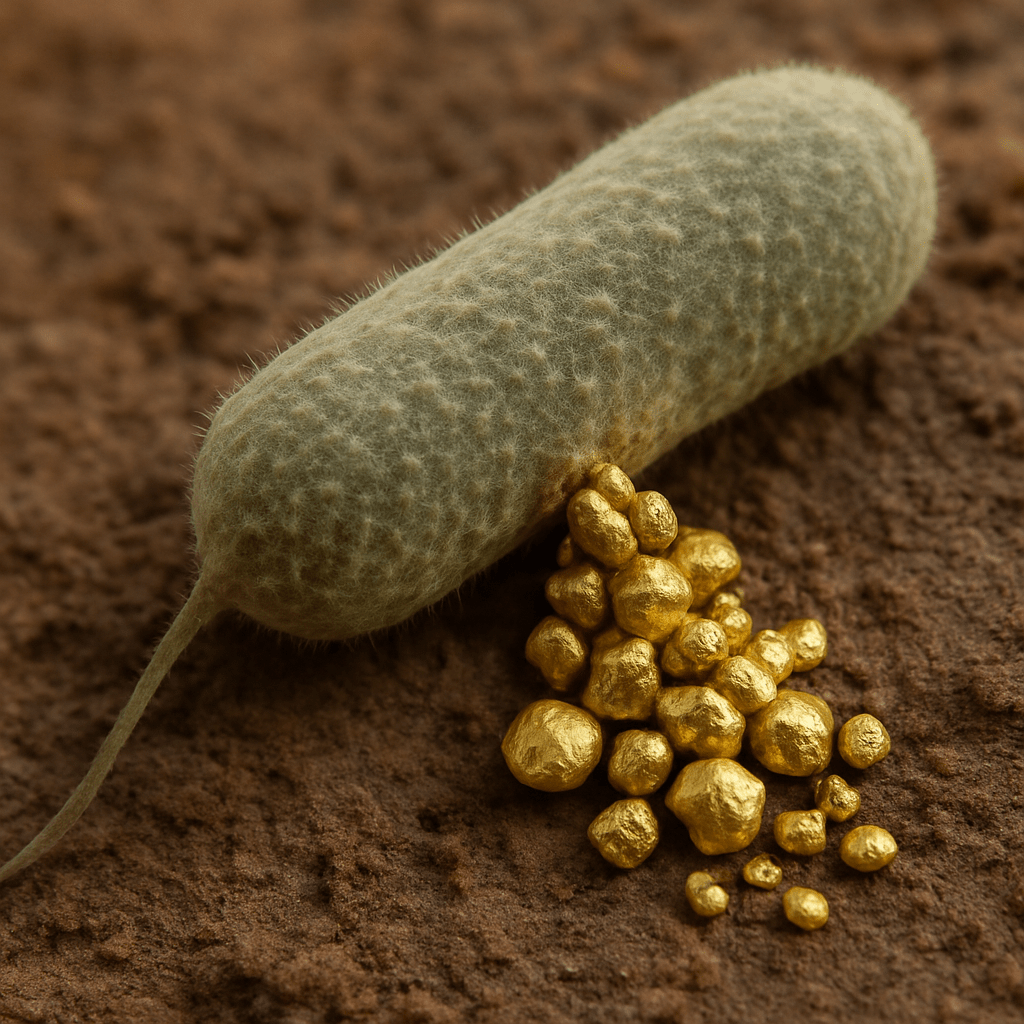
It sounds like something out of a fantasy, but a real-life microbe is turning toxic metals into pure gold. Discover the incredible secret of Cupriavidus metallidurans and how this tiny organism could revolutionize how we think about treasure and environmental clean-up.
🧪 What’s the Big Idea?
There’s a special kind of bacteria called Cupriavidus metallidurans (big name, I know 😅). It lives in places that are full of harmful metals, especially gold compounds that are poisonous to most living things.
But guess what? This bacterium doesn’t just survive — it turns the toxic gold into real, solid gold particles. Yeah, like tiny gold nuggets. It’s like the bacteria is “pooping” gold. Cool, right?
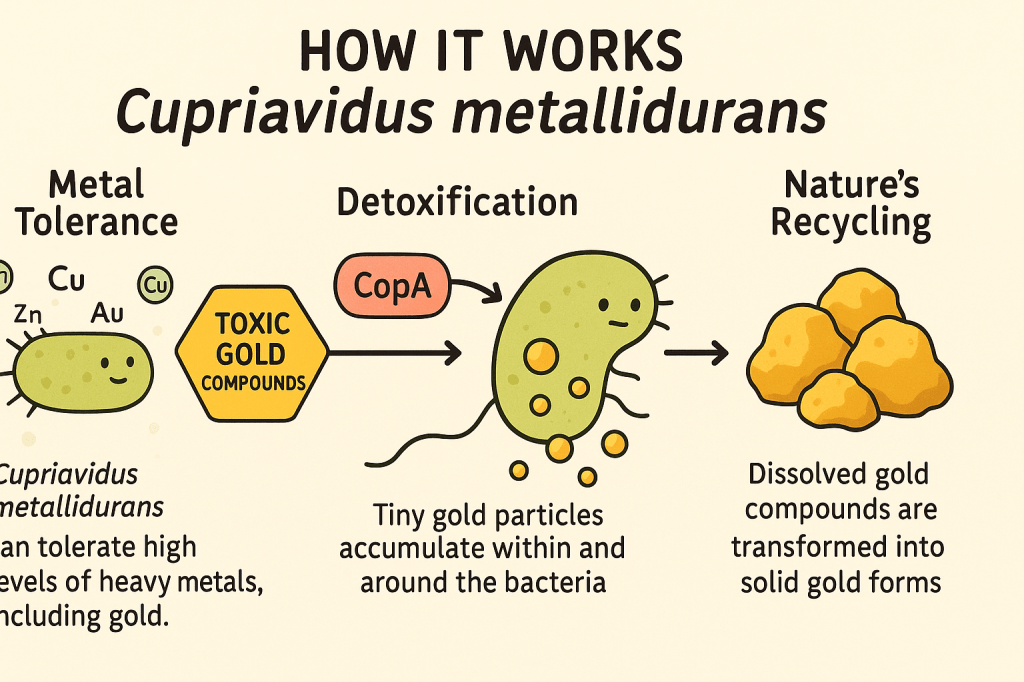
💪 Metal Tolerance
Most living things (including us) would die if we swallowed too much gold chloride — that’s a toxic gold chemical.
But this bacterium? Nah. It’s built different.
It’s very tolerant to heavy metals like:
Zinc Copper And especially gold
It can live in metal-rich places where other bacteria would die. Like a superhero of the microbial world.
🧹 Detoxification – Cleaning Up the Gold Mess
Now imagine gold chloride as a poisonous mess.
The bacterium doesn’t like it either, so it uses a special trick:
It has an enzyme (kind of like a little helper inside it) called CopA (or sometimes called CupA in other books).
What does CopA do?
🔁 It converts the dangerous gold compound into safe, solid gold metal (the kind of gold you find in jewelry!).
So it’s like the bacteria is cleaning up its room by turning poison into treasure.
💩Gold “Pooping”
Now this is the fun part.
After the gold gets changed from its poisonous form to a safe form, it doesn’t just vanish.
Nope — the gold becomes tiny solid particles, like mini nuggets of gold. These come out of the bacterium’s body, or build up around it.
So in a funny way, the bacterium is literally pooping gold.
Tiny, shiny poop. 😄
🔁 Nature’s Recycling System
This process isn’t just weird and funny — it’s part of how nature works.
Gold doesn’t always stay in big chunks underground. Sometimes it’s broken down into invisible, dissolved forms in soil and water.
This bacterium helps by:
✅ Taking the invisible gold compounds
✅ Turning them into solid gold again
✅ Making it easier for gold to gather and form natural nuggets
So Cupriavidus metallidurans is like Mother Nature’s gold recycler.
💡Why Scientists Care – Future Gold Mining?
People have been digging for gold for centuries. But mining gold is dirty and dangerous. It often uses toxic chemicals like cyanide.
But if we study this bacteria well enough, we might use it in the future to:
Collect gold in a cleaner, safer way Recover gold from low-quality ore or electronic waste Protect the environment while still getting treasure
In short, these tiny bacteria could be the gold miners of tomorrow — without the pickaxe or pollution.
 🌽NELIUS AGROwork
Leave a comment